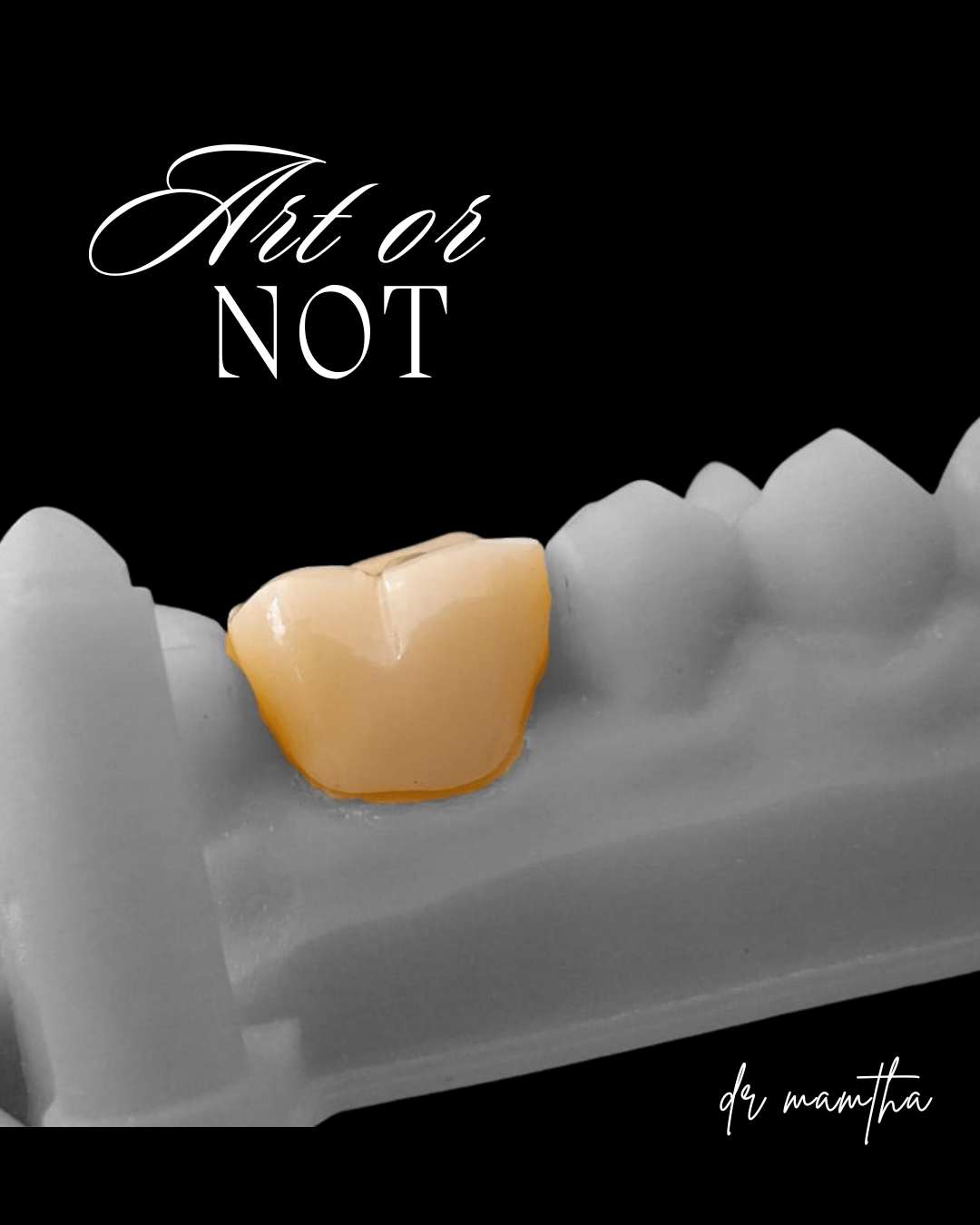
A dental crown helps restore function and protect a weakened tooth. However, its success depends on how well you care for it. Daily oral hygiene and regular check-ups play a big role in extending the life of your crown.
How to Brush Around a Crown
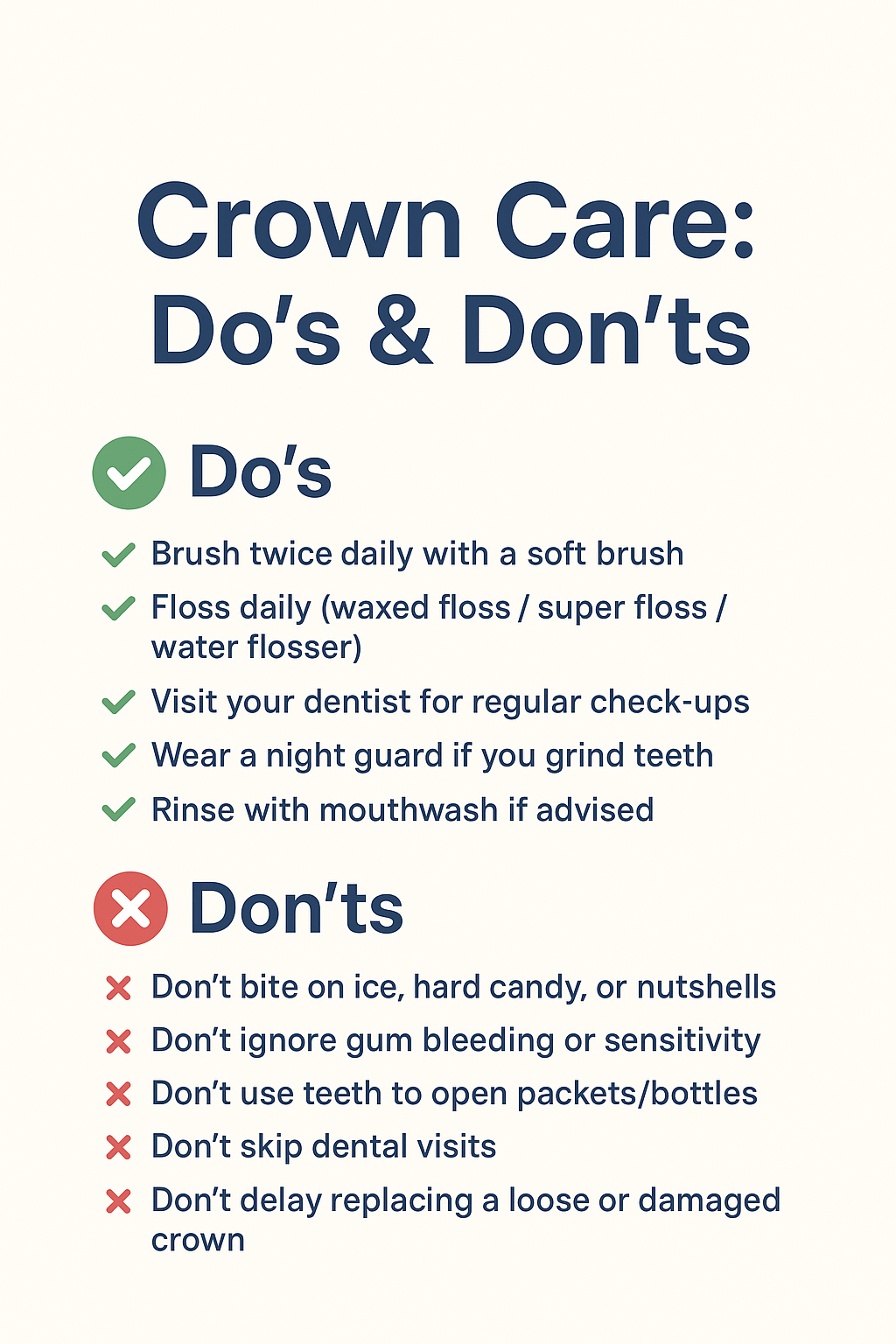
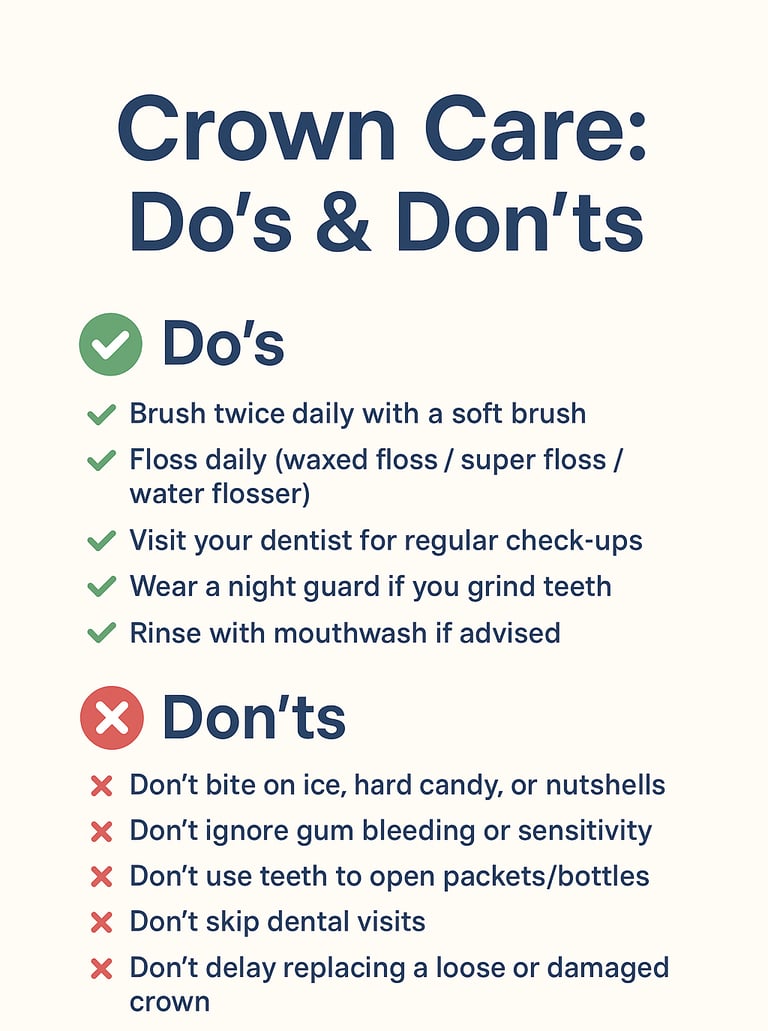
Use a soft-bristled toothbrush to avoid damaging the crown surface or irritating your gums.
Brush twice daily for two minutes, using small circular motions.
Pay special attention to the gum line around the crown, where plaque tends to collect.
Fluoride toothpaste is recommended, as it strengthens the tooth structure under the crown.
How to Floss With a Crown
Flossing removes plaque and food particles from between the crown and neighboring teeth. Proper technique is essential to avoid loosening the crown.
Slide, don’t snap: Gently guide the floss between your teeth. Avoid snapping it down on the gum line.
Curve the floss: Hug the tooth in a “C” shape and move up and down under the gum line.
Types of flossing options:
Waxed floss – Glides smoothly and reduces shredding.
Super floss – Ideal for crowns, bridges, or wider gaps.
Floss picks – Convenient but less thorough than string floss.
Water Flossers and Interdental Brushes
For those who find string floss difficult or uncomfortable:
Water flossers: Direct a stream of water around the gum line and between teeth to flush away debris. Gentle and effective, especially for multiple crowns or sensitive gums.
Interdental brushes: Small, cone-shaped brushes that clean spaces between teeth where floss may not reach. Always choose the correct size to avoid gum irritation.
Why This Matters: Consequences of Poor Crown Care
Decay beneath the crown: Plaque can creep under the margin and damage the tooth.
Gum disease: Inflamed gums can weaken the support for your crown.
Crown failure: Chips, cracks, or loosening from poor habits may require early replacement.
Bad breath and infections: Trapped bacteria around the crown can cause odor and gum infections.
Higher costs: Neglecting care often leads to more complex and expensive treatments later.
✨ Takeaway: A crown can last for many years with the right care. Gentle brushing, mindful flossing, and regular dental visits protect not only your crown but also your overall oral health.
Address
First floor, 1610, E End Main Rd, Tilak Nagar, Jayanagar, Bengaluru, Karnataka 560041
Contact
+91-88614 61104
crownd.dental@gmail.com